
Table of Contents
What Are Dark Spots on Face? Causes, Types, Prevention & Skincare Guide
Dark spots on the face are darker areas of skin that may appear after acne, sun exposure, inflammation, hormonal changes, skin injury, or other causes. They are often a form of increased pigmentation, also called hyperpigmentation.
Dark spots are common and can appear on people with all skin tones. In people with medium to deeper skin tones, dark marks after acne and other forms of pigmentation can sometimes be particularly noticeable and may take time to fade.
The important thing to remember is that not every dark spot has the same cause. A mark left after a pimple needs a different approach from melasma or a sunspot. Understanding the cause is the first step toward choosing suitable skincare.
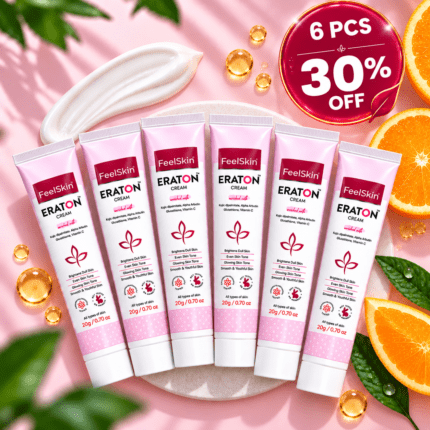
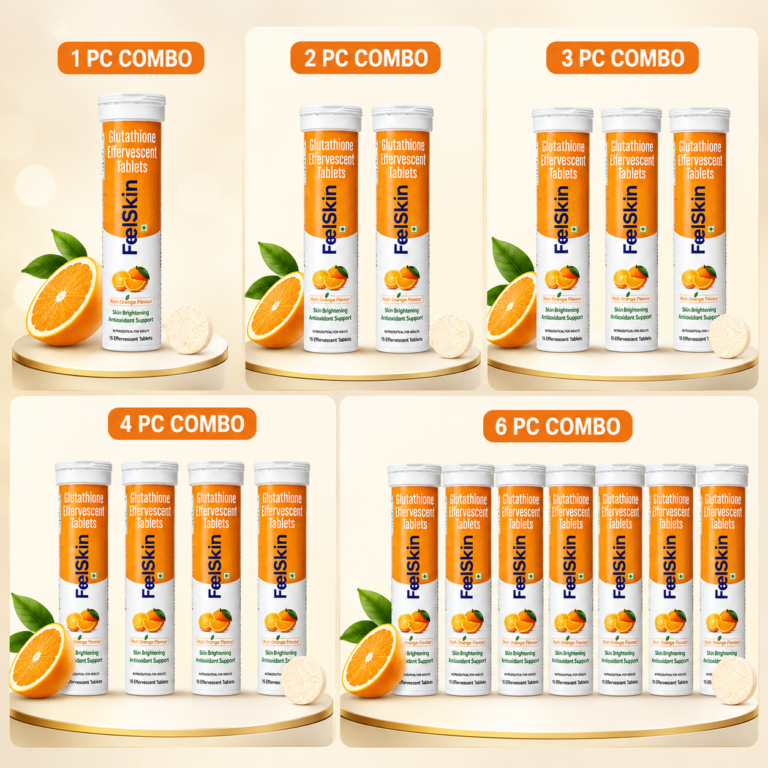
FeelSkin Eraton Cream (6 PC Combo Pack)
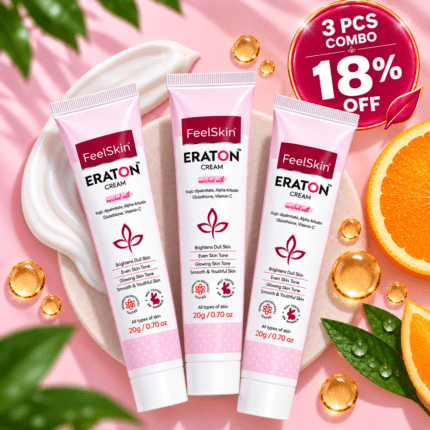
FeelSkin Eraton Cream (3 PC Combo Pack)
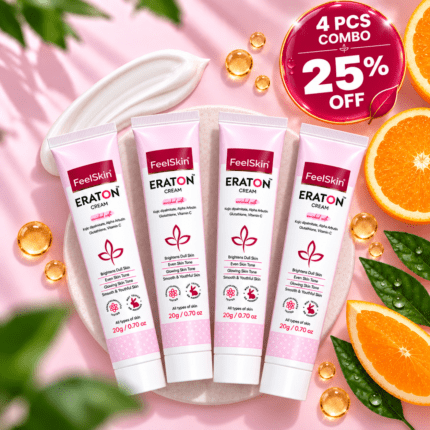
Feelskin Eraton Cream (4 PC Combo Pack)
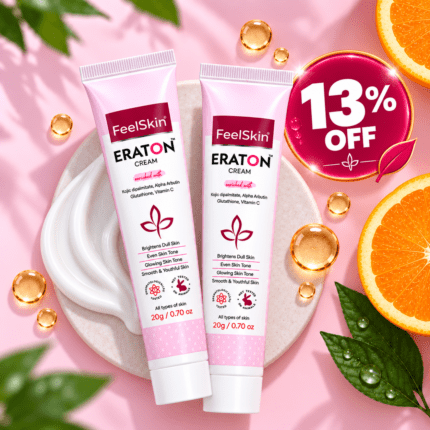
Feelskin Eraton Cream (2 PC Combo Pack)
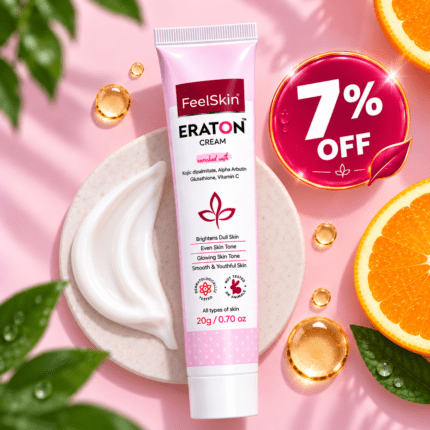
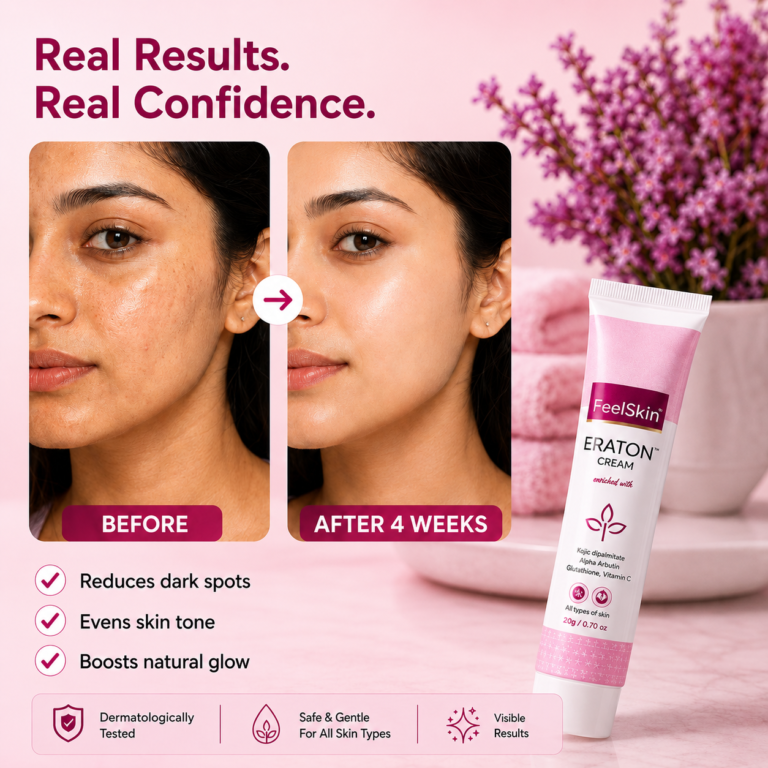
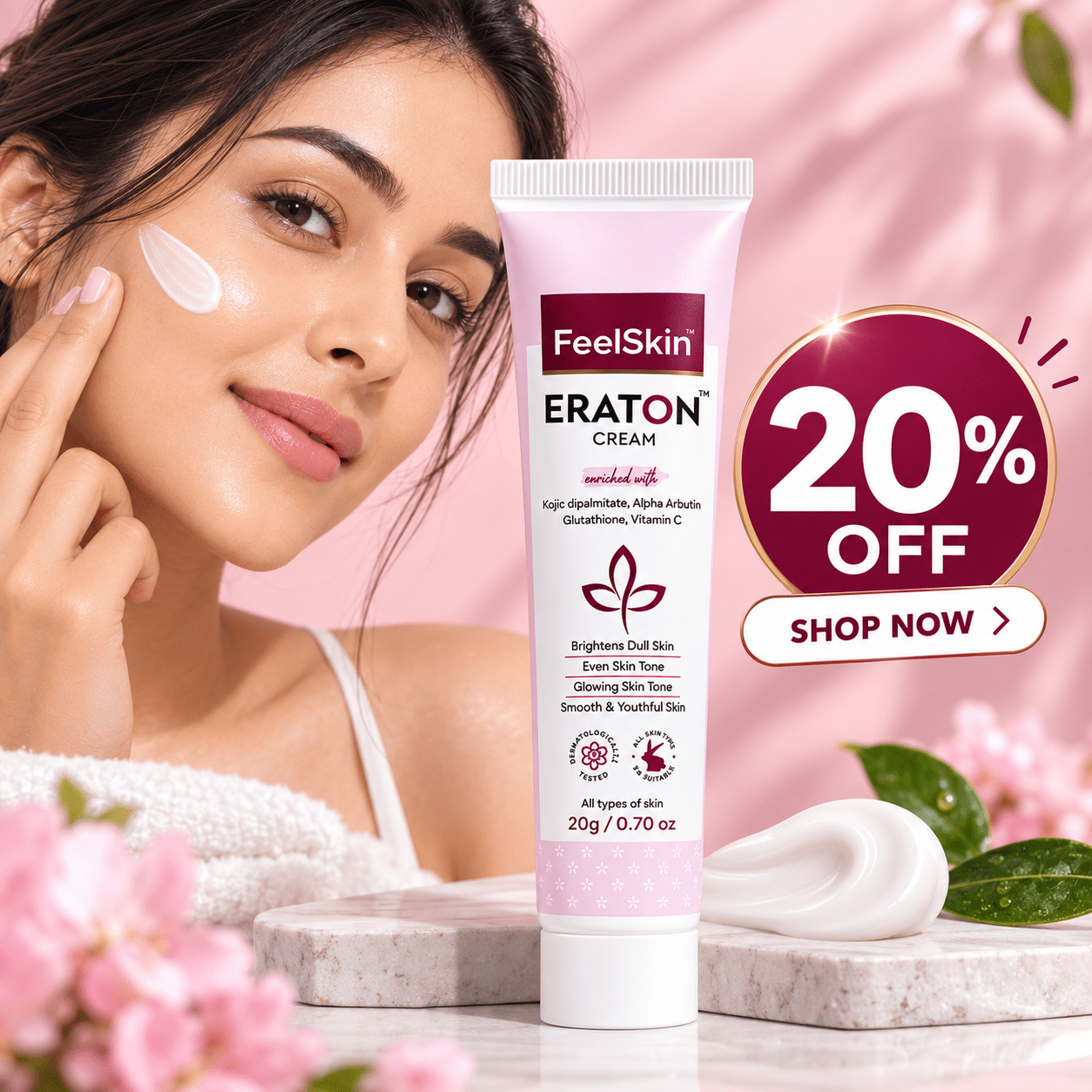
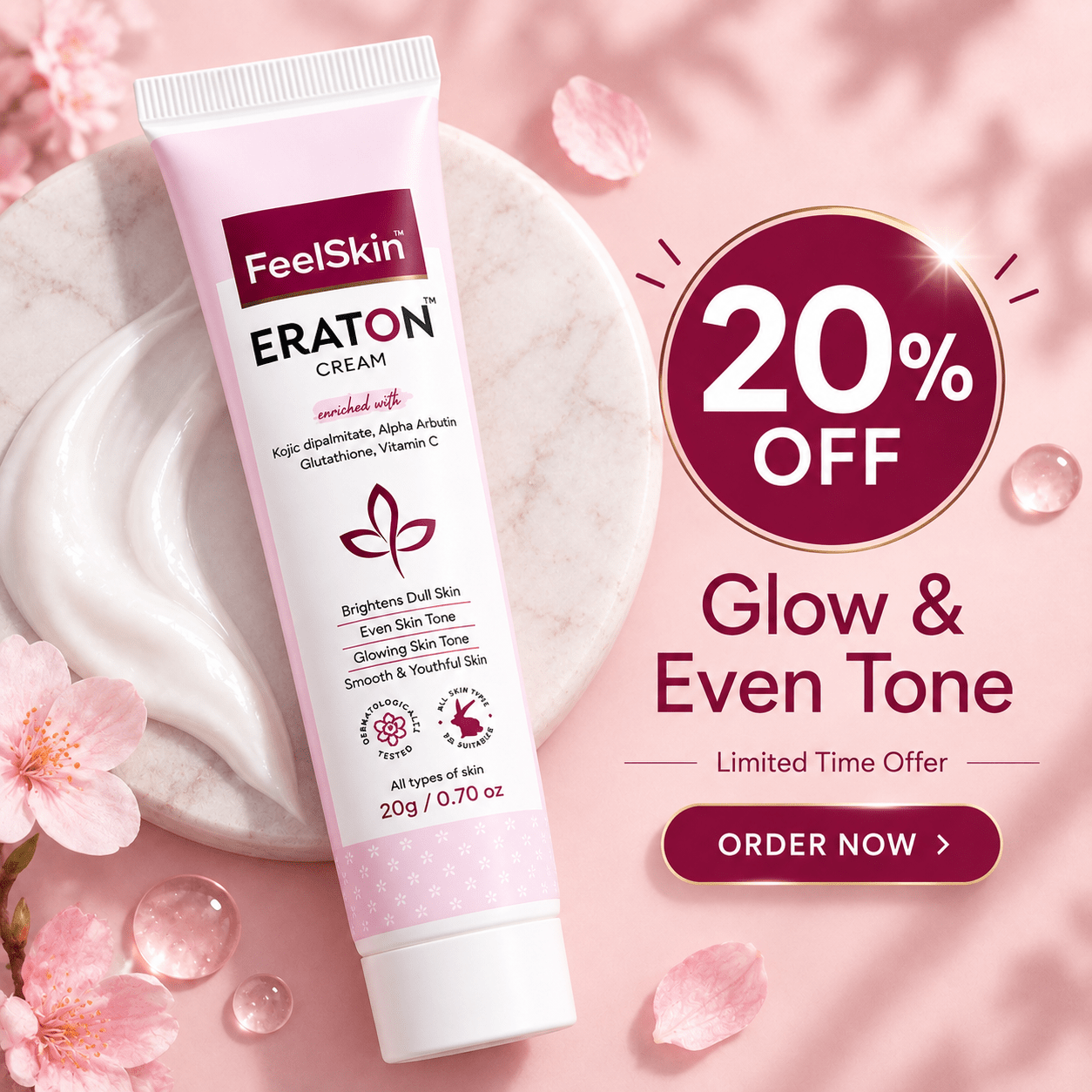
FeelSkin ERATON Cream for Dark Spots & Uneven Skin Tone – 20g
What Are Dark Spots on the Face?
Dark spots are areas of skin that look darker than the surrounding skin.
You may notice them as:
- Brown spots
- Dark brown patches
- Flat marks left after pimples
- Sunspots
- Uneven areas of skin tone
- Grey-brown patches associated with some forms of pigmentation
The darker colour is generally related to melanin, the pigment that gives your skin its natural colour.
When the skin produces more melanin or pigment becomes concentrated in a particular area, that area can appear darker.
The medical term hyperpigmentation is often used for this type of darkening. IADVL describes facial pigmentation as dark patches or spots caused by increased pigmentation in the skin.
What Causes Dark Spots on the Face?
There is no single reason for dark spots.
The most common causes include sun exposure, acne, skin inflammation, hormonal changes, skin injuries, genetics, certain medicines and some medical conditions.
1. Sun Exposure
Sun exposure is one of the biggest factors behind many types of facial pigmentation.
UV radiation can stimulate the skin to produce more melanin. Over time, repeated sun exposure can contribute to darker spots and uneven skin tone.
This is especially important if you spend a lot of time outdoors.
For people with darker skin tones, visible light from the sun can also worsen hyperpigmentation and melasma. The American Academy of Dermatology recommends considering a tinted sunscreen containing iron oxide, along with SPF 30 or higher and broad-spectrum protection, for people concerned about these conditions.
Common signs of sun-related dark spots
They may appear as:
- Small brown spots
- Flat darker marks
- Multiple spots on sun-exposed areas
- Uneven skin tone
These are sometimes called sunspots or solar lentigines.
2. Acne and Pimples
One of the most common questions is:
Why do pimples leave dark spots?
When an acne lesion heals, the inflammation can leave behind a flat darker mark called post-inflammatory hyperpigmentation (PIH).
These marks are often mistaken for acne scars.
The American Academy of Dermatology explains that a flat pigmented mark left after acne is usually not the same thing as a physical acne scar. PIH can fade over time, although some marks may remain for many months or longer.
This is why you may see:
Pimple → Pimple heals → Flat dark mark remains
This is especially common in people with medium to darker skin tones.
3. Post-Inflammatory Hyperpigmentation
PIH does not only happen after acne.
It may appear after:
- Pimples
- Cuts
- Burns
- Skin irritation
- Rashes
- Other inflammatory skin conditions
- Some cosmetic procedures
When inflammation or injury triggers increased pigmentation, the affected area can remain darker after the original problem has healed.
Example
Imagine you scratch your face or have an inflamed pimple.
The skin heals, but the area remains brown or darker.
That remaining flat mark may be PIH.
4. Hormonal Changes
Hormones can play an important role in certain types of pigmentation, particularly melasma.
Melasma often appears as brown or grey-brown patches on areas such as:
- Cheeks
- Forehead
- Nose
- Upper lip
- Chin
Hormonal changes can contribute to melasma, and sunlight can make it more noticeable.
Pregnancy and some hormonal medicines are examples of situations associated with melasma.
Because melasma can be persistent and may return after improvement, identifying it correctly is important.
5. Skin Irritation and Injury
Your skin can develop dark marks after irritation or injury.
Possible triggers include:
- Harsh skincare products
- Excessive scrubbing
- Burns
- Cuts
- Inflammation
- Repeated rubbing
IADVL warns against aggressively scrubbing pigmentation because irritation can make the problem worse.
The American Academy of Dermatology also recommends gentle skincare for people dealing with melasma and notes that products that burn or sting can irritate the skin and worsen dark spots.
6. Genetics
Some people naturally have a greater tendency to develop freckles, pigmentation or certain types of dark spots.
Your genetics can influence:
- Skin colour
- How your skin responds to sunlight
- Freckling
- Your tendency to develop pigmentation after inflammation
So dark spots are not simply a result of poor skincare.
7. Certain Medicines and Medical Conditions
Some medicines can increase sensitivity to sunlight or contribute to pigmentation changes.
Certain medical conditions can also be associated with changes in skin colour. IADVL notes that thyroid disorders, adrenal disorders and some nutritional deficiencies can sometimes be associated with pigmentation problems.
This is one reason you should not assume every new or unusual dark patch is simply a cosmetic concern.
What Are the Different Types of Dark Spots?
“Dark spots” is a broad term.
Different types can have different appearances and causes.
1. Post-Acne Dark Spots
These are flat darker marks that remain after acne or pimples heal.
They are often a form of post-inflammatory hyperpigmentation rather than a true acne scar.
Common searches related to this problem
- Dark spots after acne
- Dark spots after pimples
- Pimple marks
- Acne dark spots
- Post-acne pigmentation
- How to reduce dark spots after pimples
2. Sunspots
Sunspots, also called solar lentigines, are areas of pigmentation associated with long-term sun exposure.
They commonly appear on areas that receive more sun, such as the:
- Face
- Hands
- Arms
Sun protection is an important part of preventing additional sun-related pigmentation.
3. Melasma
Melasma causes patches of darker pigmentation, commonly on the face.
It often appears in a fairly symmetrical pattern and may affect:
- Cheeks
- Forehead
- Nose
- Upper lip
- Chin
Hormonal factors and sunlight can contribute to melasma.
Melasma can be difficult to manage and may return, so professional advice may be useful.
4. Freckles
Freckles are small pigmented spots influenced by genetics and sun exposure.
They are not the same as every other type of facial dark spot.
5. Age Spots
Age spots are usually associated with cumulative sun exposure over time.
They are also known as solar lentigines.
Despite the name, they are closely connected with long-term sun exposure rather than simply getting older.
Dark Spots vs Acne Scars: What Is the Difference?
This is an important distinction.
Dark spot
A dark spot after acne is often:
- Flat
- Brown, purple, red or darker than surrounding skin
- Not physically indented or raised
This may be post-inflammatory hyperpigmentation.
Acne scar
An acne scar can change the physical texture of the skin.
It may be:
- Depressed
- Raised
- Uneven
- Textured
The American Academy of Dermatology explains that flat pigmented marks after acne are generally different from acne scars.
Understanding this difference matters because a cream for pigmentation will not necessarily correct a structural acne scar.
Are Dark Spots the Same as Pigmentation?
Not exactly.
Dark spots is a common everyday term.
Pigmentation is a broader term.
For example:
A dark spot after a pimple can be a form of pigmentation.
Sunspots are also related to pigmentation.
Melasma is a pigmentation disorder.
This is why searches such as “dark spots on face,” “pigmentation on face,” and “hyperpigmentation on face” can overlap while still referring to different problems.
How to Reduce Dark Spots on the Face
The best approach depends on the cause.
There is no one treatment that works for every dark spot.
A practical skincare routine generally starts with four basics:
Sun protection → Gentle skincare → Suitable ingredients → Consistency
Let’s look at each one.
1. Use Sunscreen Daily
If you are trying to improve the appearance of dark spots, sun protection should be one of your highest priorities.
Dermatologists commonly recommend a broad-spectrum sunscreen with SPF 30 or higher. When outdoors, sunscreen should be reapplied approximately every two hours or according to the product directions, particularly after swimming or sweating.
For pigmentation-prone skin
A tinted sunscreen containing iron oxide may provide additional protection against visible light, which can worsen hyperpigmentation and melasma, particularly in darker skin tones.
Also consider:
- Staying in the shade when possible
- Wearing a wide-brimmed hat
- Using UV-protective clothing
- Limiting prolonged direct sun exposure
2. Keep Your Skincare Routine Gentle
More products do not always mean better results.
A simple routine can be easier to follow consistently.
Morning skincare routine
Gentle cleanser → Moisturiser → Sunscreen
Night skincare routine
Gentle cleanser → Targeted skincare product → Moisturiser if needed
Avoid products that consistently cause burning or strong irritation.
The AAD recommends gentle, fragrance-free skincare for melasma and advises stopping products that burn or sting.
3. Do Not Pick or Squeeze Pimples
If you repeatedly pick at pimples, you may increase inflammation and the chance of lingering marks.
Treating acne early can also help reduce the development of long-lasting post-inflammatory dark spots.
Try to avoid:
- Picking pimples
- Scratching active acne
- Aggressive facial scrubbing
- Repeatedly irritating the same area
4. Choose Suitable Skincare Ingredients
Several ingredients are commonly used in pigmentation-focused skincare.
The right ingredient depends on your skin, the cause of the dark spots and the formulation.
Vitamin C
Vitamin C is commonly used in skincare designed for antioxidant and brightening support.
It is frequently included in products intended to improve the appearance of uneven skin tone.
Niacinamide
Niacinamide, also known as vitamin B3, is widely used in skincare for uneven skin tone and pigmentation concerns.
Alpha Arbutin
Alpha arbutin is a popular ingredient in brightening-focused skincare formulations and is commonly used in products designed around the appearance of pigmentation and dark spots.
Kojic-Derived Ingredients
Kojic acid is a recognised ingredient used in pigmentation-focused skincare. Kojic dipalmitate is a kojic-derived cosmetic ingredient used in some brightening formulations.
Glutathione
Glutathione is an antioxidant and is used in some cosmetic formulations focused on skin brightening.
However, consumers should be cautious about exaggerated promises such as guaranteed whitening or permanent removal of pigmentation.
What Are the Best Ingredients for Dark Spots?
There is no universal “best ingredient” for every person.
The useful question is:
Which ingredients are appropriate for my type of dark spot and my skin?
Some commonly used ingredients include:
| Ingredient | Common skincare role |
|---|---|
| Vitamin C | Antioxidant and brightening-focused skincare |
| Niacinamide | Uneven skin tone and skin barrier support |
| Alpha Arbutin | Brightening-focused formulations |
| Kojic Acid | Pigmentation-focused skincare |
| Kojic Dipalmitate | Kojic-derived ingredient used in cosmetic brightening formulations |
| Glutathione | Antioxidant/brightening-focused formulations |
| Hyaluronic Acid | Hydration support |
The overall formula, concentration, stability, skin tolerance and consistency of use matter—not just the ingredient name.
Can Vitamin C Help With Dark Spots?
Vitamin C is commonly used in brightening skincare and antioxidant-focused formulations.
It can be a useful part of a routine designed to improve the appearance of uneven skin tone.
However, it is important not to expect an overnight transformation.
Your results can depend on the formulation, your skin and the reason the dark spot developed.
Can Niacinamide Help With Dark Spots?
Niacinamide is widely used in skincare for uneven-looking skin tone and pigmentation concerns.
IADVL includes vitamin B3, also known as niacinamide, among topical ingredients used in facial pigmentation care.
It is often a popular choice for people who want a relatively simple skincare routine.
Can Alpha Arbutin Help With Dark Spots?
Alpha arbutin is widely used in brightening-focused cosmetic products.
It is often selected by people looking to improve the appearance of pigmentation and uneven skin tone.
As with any skincare ingredient, individual results can vary.
Can Kojic Dipalmitate Help With Dark Spots?
Kojic dipalmitate is a derivative of kojic acid used in some cosmetic brightening formulations.
It is used in products formulated around the appearance of pigmentation and uneven skin tone.
If you are choosing a product containing kojic-derived ingredients, always follow the product’s instructions and stop use if significant irritation occurs.
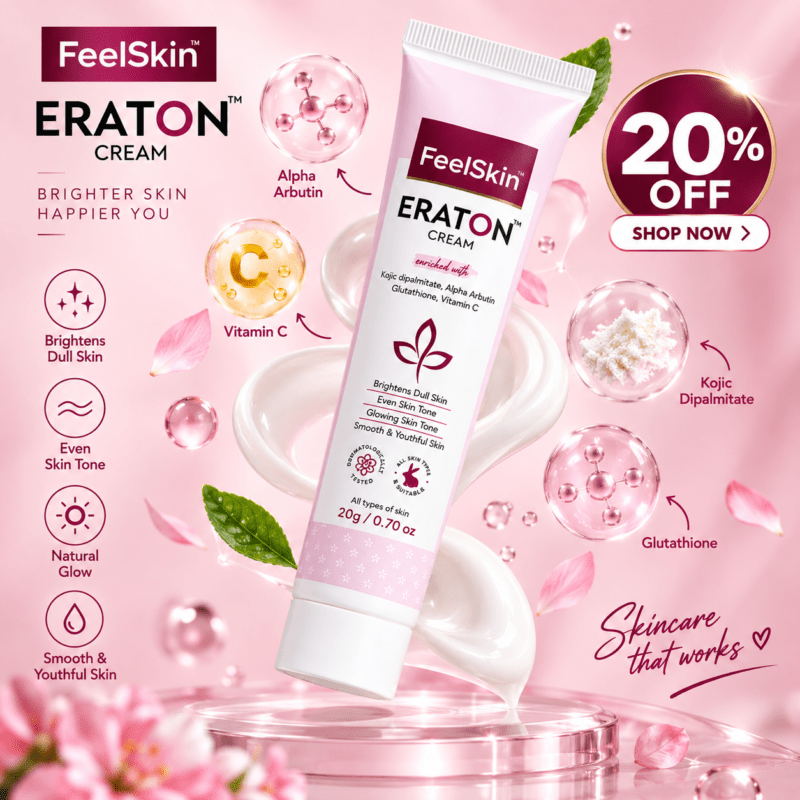
FeelSkin ERATON Cream for Dark Spots and Uneven Skin Tone
For people looking for a pigmentation-focused skincare cream, FeelSkin ERATON Cream is formulated for the appearance of:
- Dark spots
- Pigmentation
- Uneven skin tone
- Dull-looking skin
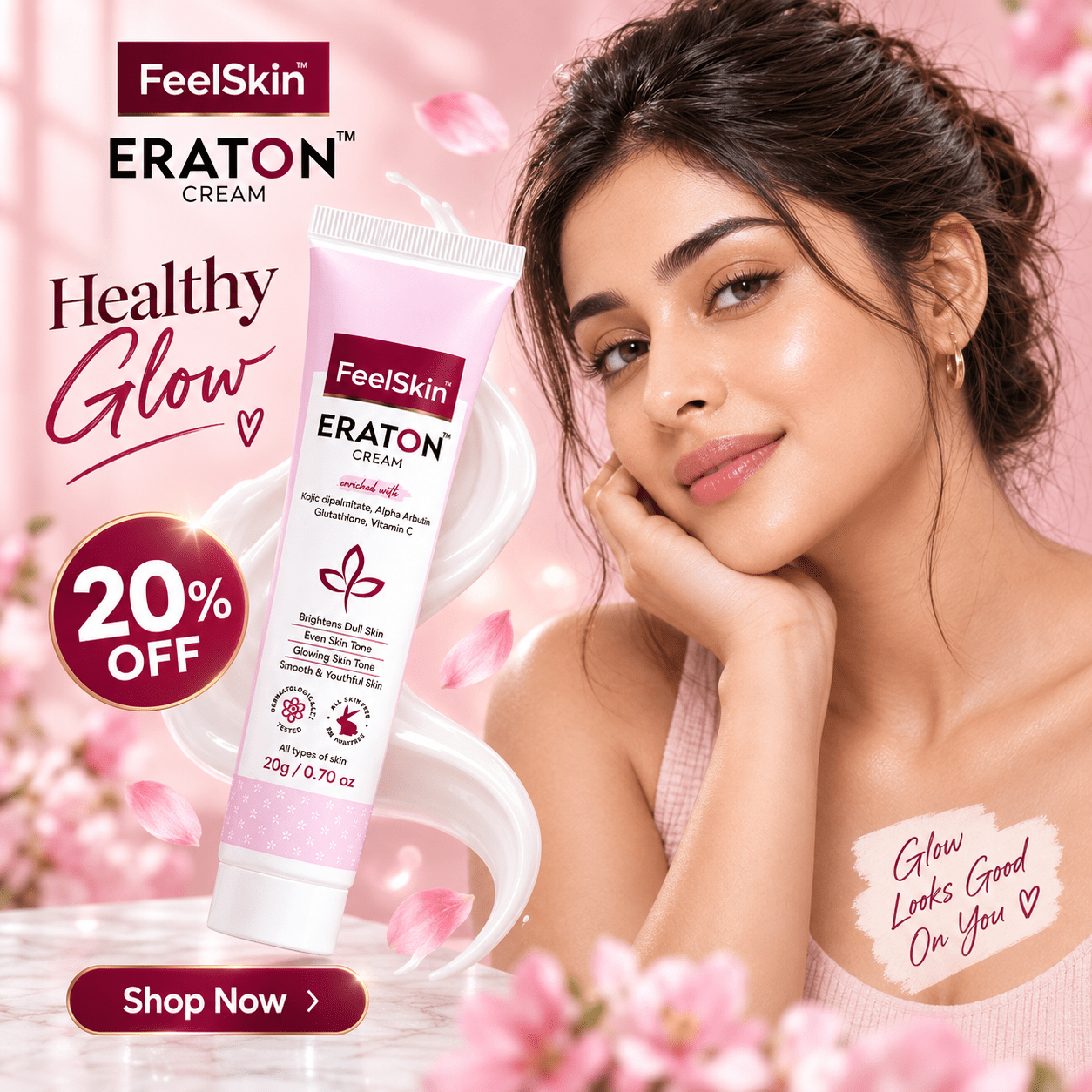
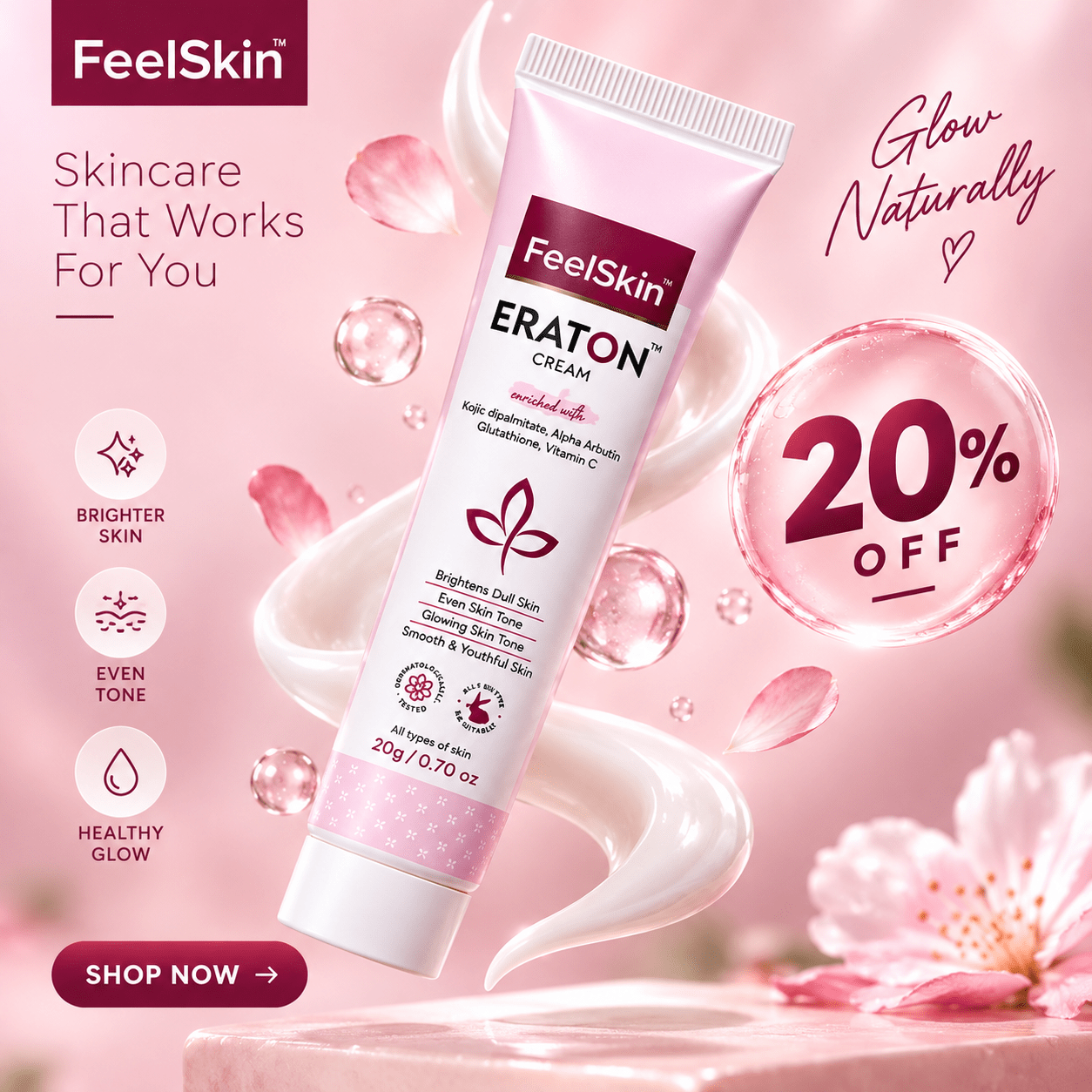
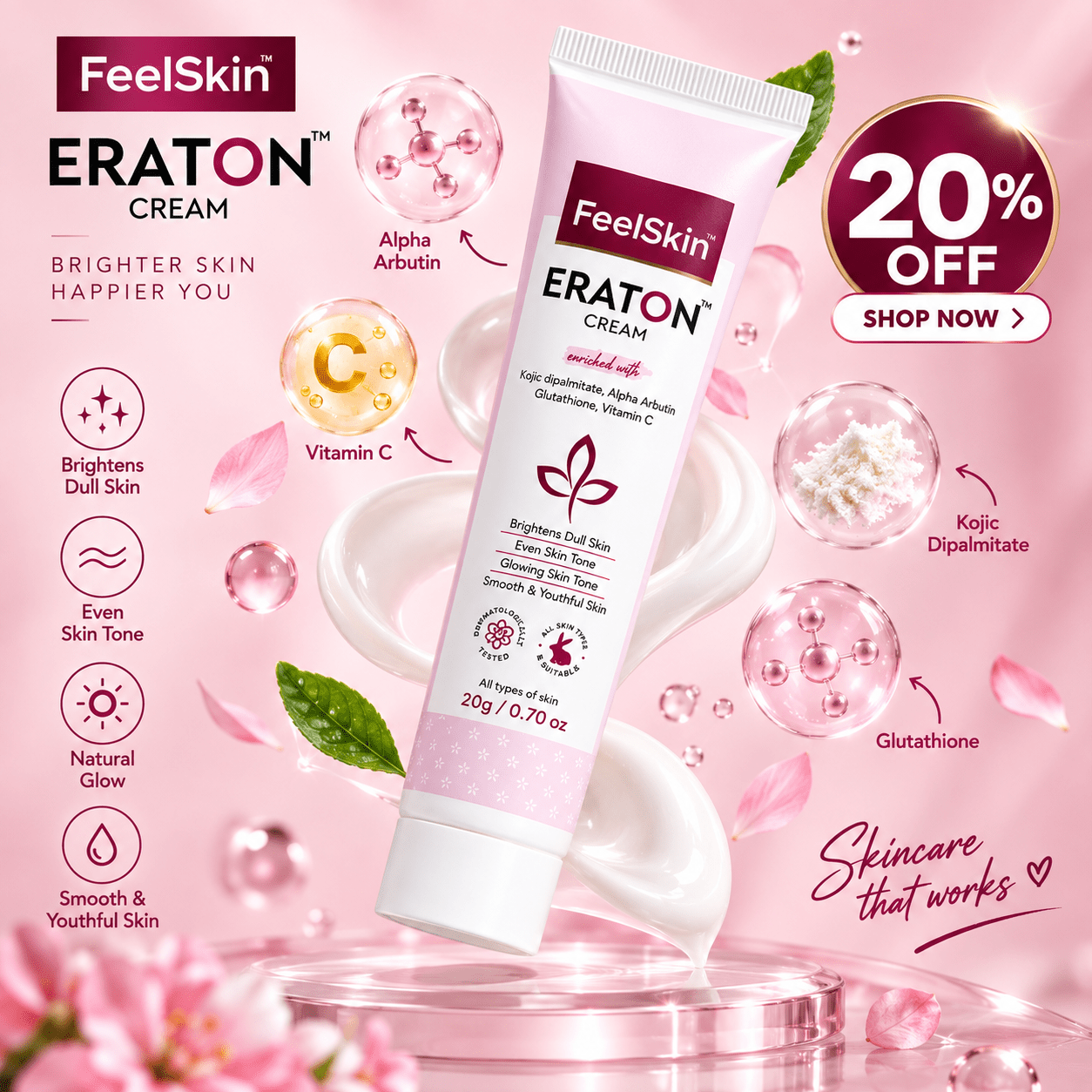
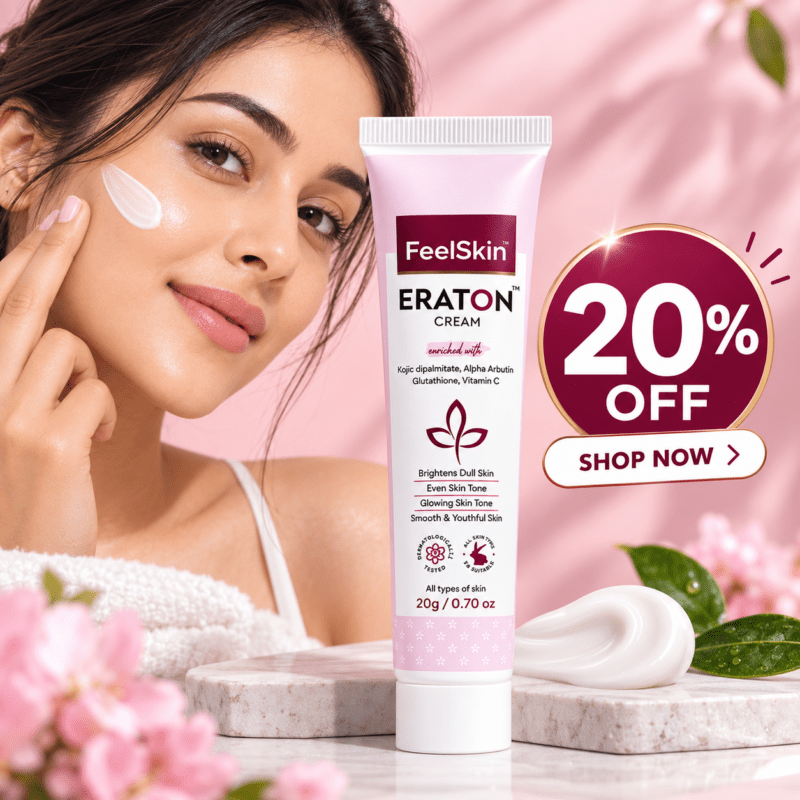
FeelSkin ERATON Cream contains Kojic Dipalmitate, Alpha Arbutin, Glutathione and Vitamin C and comes in a 20g tube. FeelSkin lists it as a skin brightening and pigmentation-care cream suitable for all skin types.
How ERATON fits into a simple skincare routine
A simple routine can look like:
Morning:
Cleanser → Moisturiser → Sunscreen
Night:
Cleanser → ERATON according to the product directions → Moisturiser if required
Sunscreen is still important during the day because sun exposure can worsen pigmentation.
Before using a new skincare product
Consider a patch test first.
If you experience persistent or significant irritation, stop using the product and consult a qualified healthcare professional.
Important: FeelSkin ERATON Cream is a cosmetic skincare product designed to improve the appearance of dark spots, pigmentation and uneven-looking skin tone. It should not be presented as a guaranteed cure for a medical pigmentation disorder. Individual results can vary.
How Long Do Dark Spots Take to Fade?
pigmentation can take even longer.
The timeline can depend on:
- The original cause
- Type of pigmentation
- Depth of pigment
- Skin tone
- Sun exposure
- Inflammation
- Skincare routine
- Consistency of treatment
This is why claims such as “dark spots gone in 3 days” should be treated carefully
Can Dark Spots Be Removed Permanently?
Not always.
Some dark spots can fade substantially, but certain pigmentation conditions can return.
Melasma in particular can be persistent and may come back after improvement. Long-term sun protection is an important part of management.
Instead of focusing only on “permanent removal,” a better goal is:
Reduce the appearance → prevent new spots → protect the skin → maintain results
How to Prevent New Dark Spots
Prevention is easier when you understand your triggers.
Protect yourself from the sun
Use broad-spectrum SPF 30+ sunscreen and reapply when needed, particularly during outdoor exposure.
Avoid excessive skin irritation
Do not repeatedly scrub or use products that cause strong burning or irritation.
Treat active acne
Controlling acne can help reduce the development of new post-acne dark marks.
Avoid unnecessary picking
Picking can increase skin inflammation and contribute to marks after acne.
Keep your routine consistent
Constantly changing products makes it harder to understand how your skin responds.
What Should You Avoid for Dark Spots?
Avoid harsh scrubbing
Dark spots are not dirt sitting on top of your skin.
Scrubbing harder will not simply “scrub away” pigmentation and can cause more irritation.
Avoid unsafe DIY remedies
Popular internet remedies such as lemon juice or toothpaste can irritate or burn the skin.
IADVL specifically warns against using such DIY methods for pigmentation.
Avoid unrealistic expectations
Be careful with products or advertisements promising:
- Permanent removal
- Overnight results
- Guaranteed whitening
- Dark spots gone in a few days
Good skincare usually requires consistency and patience.
Dark Spots on Face: A Simple Routine for Indian Skin
India has a wide range of skin tones and skin types, and pigmentation can affect people across this range.
A practical routine does not need to be complicated.
Morning
Step 1: Cleanse
Use a gentle cleanser suited to your skin.
Step 2: Moisturise
Use moisturiser if your skin needs additional hydration.
Step 3: Sunscreen
Use a broad-spectrum SPF 30 or higher.
For people particularly concerned about melasma or pigmentation and who have darker skin tones, a tinted sunscreen containing iron oxide may provide useful visible-light protection.
Night Routine
Step 1: Cleanse
Remove sunscreen, makeup and daily buildup gently.
Step 2: Use targeted skincare
Choose a suitable pigmentation-focused product according to its instructions.
Step 3: Moisturise
Use moisturiser when needed.
The key is not to use as many products as possible.
The key is to use a suitable routine consistently without unnecessary irritation.
Dark Spots on Face: Myths vs Facts
Myth 1: Dark spots mean your skin is dirty.
Fact: Dark spots are related to pigmentation, not simply dirt on the skin.
Myth 2: Scrubbing removes dark spots.
Fact: Aggressive scrubbing can irritate the skin and may make pigmentation worse.
Myth 3: Only fair skin develops dark spots.
Fact: People with every skin tone can develop hyperpigmentation. Dark marks after acne are particularly common in people with medium to darker skin tones.
Myth 4: Dark spots disappear overnight.
Fact: Many dark spots take weeks or months to improve, and some can take considerably longer.
Myth 5: Every dark spot is an acne scar.
Fact: A flat dark mark left after acne can be PIH rather than a structural acne scar.
Myth 6: Natural remedies are always safe.
Fact: Some DIY ingredients can irritate or burn the skin. IADVL specifically warns against remedies such as lemon juice and toothpaste.
Myth 7: Once dark spots improve, they can never return.
Fact: Some types of pigmentation can return, particularly when the original trigger continues. Sun protection and maintenance are important.
Any Query?
Frequently Asked Questions About Dark Spots
What are dark spots on the face?
Dark spots are areas of skin that appear darker than the surrounding skin. They are often related to increased pigmentation or hyperpigmentation. Common causes include acne, sun exposure, inflammation, hormones and genetics.
What causes dark spots on the face?
Common causes include sun exposure, acne, post-inflammatory hyperpigmentation, hormonal changes, skin injury, genetics, certain medicines and some medical conditions.
Why do pimples leave dark spots?
Inflammation from acne can trigger post-inflammatory hyperpigmentation. After the pimple heals, a flat darker mark may remain.
Are dark spots the same as pigmentation?
Dark spots are a common description for visible darker marks, while pigmentation is a broader term. Many dark spots are forms of hyperpigmentation.
How can I reduce dark spots on my face?
Focus on sun protection, gentle skincare, avoiding unnecessary irritation, controlling active acne and using suitable pigmentation-focused skincare consistently.
What is the best cream for dark spots?
There is no single cream that is best for every person or every cause of pigmentation. Look for a well-formulated product with suitable ingredients and realistic claims, and choose according to your skin and the type of pigmentation.
Can vitamin C help dark spots?
Vitamin C is commonly used in brightening and antioxidant-focused skincare. It may be included in routines targeting the appearance of uneven skin tone and pigmentation.
Can niacinamide help dark spots?
Niacinamide is commonly used in skincare for uneven skin tone and pigmentation concerns and is included among topical ingredients used for facial pigmentation care.
Can alpha arbutin help dark spots?
Alpha arbutin is widely used in brightening-focused cosmetic formulations designed around uneven skin tone and pigmentation.
Can kojic dipalmitate help with dark spots?
Kojic dipalmitate is a kojic-derived cosmetic ingredient used in some brightening formulations.
Does sunscreen help prevent dark spots?
Sun protection is an important part of preventing and managing many pigmentation concerns. Dermatologists generally recommend broad-spectrum SPF 30+ sunscreen, along with additional sun-protective measures.
Does sunscreen matter for Indian skin?
Yes. People with brown and darker skin tones can also develop sun-related hyperpigmentation. Visible light from the sun can contribute to hyperpigmentation, particularly in darker skin tones.
How long do dark spots take to fade?
The timeline varies. Some spots can take months to fade, and deeper pigmentation may take much longer. The AAD notes that some dark spots can take 6–12 months to fade on their own.
Can dark spots come back after treatment?
Yes. Some types of pigmentation, including melasma, can return. Continued sun protection and maintenance skincare are important.
Should I scrub dark spots?
No. Scrubbing does not remove the underlying pigmentation and can irritate your skin.
Are dark spots after acne scars?
Not necessarily. A flat pigmented mark after acne is often PIH rather than an acne scar. A scar generally changes the texture of the skin, while PIH changes its colour.
What should I do if a dark spot is changing?
See a dermatologist, especially if a spot is new, rapidly changing, irregular, bleeding or otherwise unusual.
Is FeelSkin ERATON Cream suitable for dark spots?
FeelSkin ERATON Cream is formulated for the appearance of dark spots, pigmentation, uneven skin tone and dull-looking skin. It contains Kojic Dipalmitate, Alpha Arbutin, Glutathione and Vitamin C.